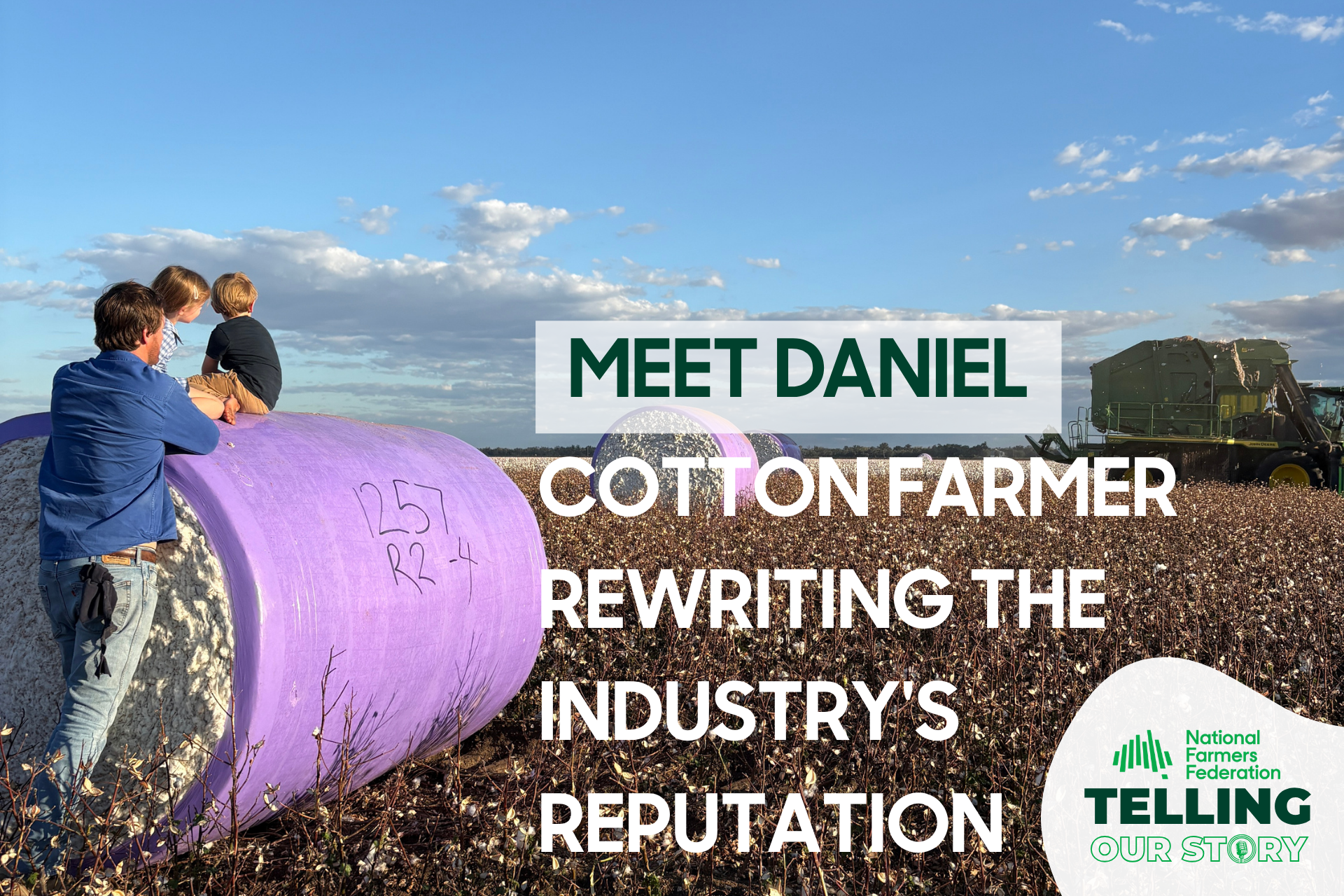
Born and raised on the family farm, my guest today has chosen to make a life back where it all started in Wee Waa NSW. After studying, and a corporate career, turns out there was no place like home after all. From cattle, to corn, to cotton, he’s passionate about sustainability and biodiversity, interests that earned him the Nuffield Scholarship in 2017 and more recently, he became the Chair of the Lower Namoi Cotton Growers Association.
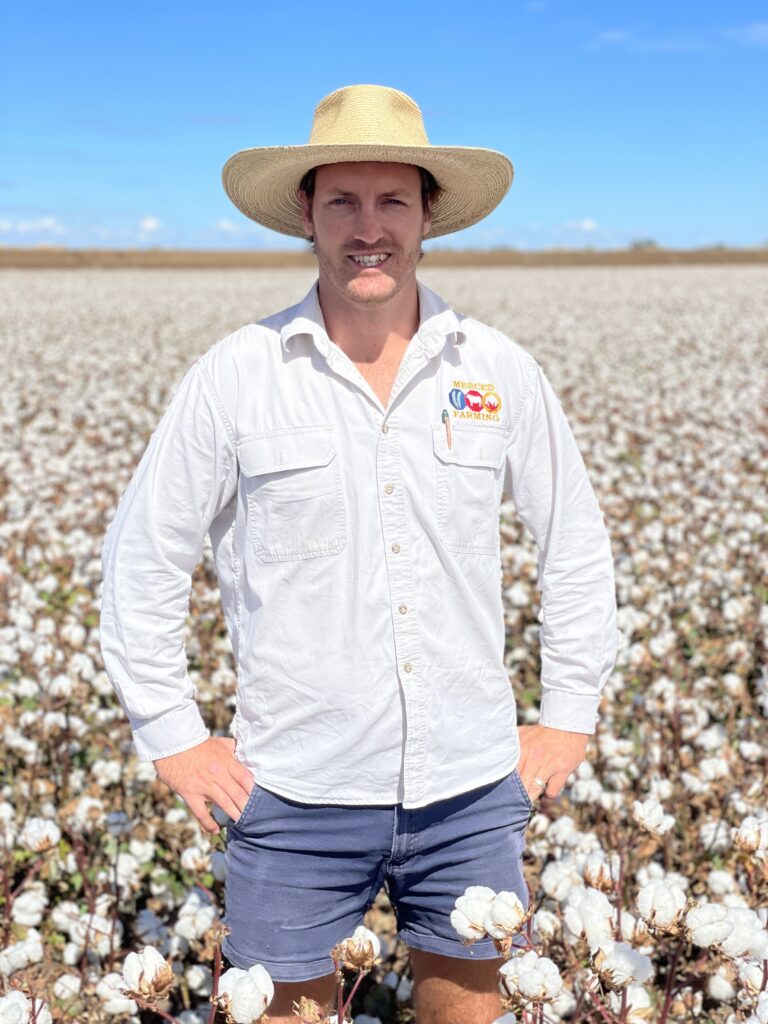
Daniel Kahl of Merced Farming, says no matter where else he ventured, coming back to the farm always called to him. “I gave myself every opportunity to find something else and couldn’t shake it,” he shares.
These days, Daniel is the business manager at the family farm and works alongside his dad and brothers. “The timing of when we came home was the neighbour knocking on the door and offering us a crack at the place next door. That meant, we sort of doubled in size about 12 years ago.” That scale allowed more specialised roles within the family, Daniel’s place being marketing, budgeting, HR, as well as some hands-on work with the cattle. While his brother Sam, runs the cropping.
A large part of the cropping enterprise has been developed for irrigation with cotton the primary crop. In addition, they have corn, wheat, mung beans, faba beans and some pulses. “We’re irrigated farmers. So, primarily what our job is, is to convert the water that we do have access to, when we have access to it, into the best return we can from that.”
“In a year where water is our least available resource, our approach becomes what’s our best return per megalitre, not return per hectare, because it’s not hectares we’re short of, in those scenarios.”
Biodiversity is always front of mind with a crop rotation that nurtures soil health, monitoring carbon audits and sectioning off native vegetations areas to bolster that balance. The family has invested heavily in integrated pest management to minimise the number of insecticides needed. “We’ve only applied 4 insecticides to our cotton crops in the last 6 seasons. So, that’s a pretty nice feeling.”
Daniel went through the Nuffield Scholarship program in 2017 and credits the experience with expanding his networks in order to learn and improve. “I think that’s one of the great things about many parts of ag, is how well we share knowledge with each other and build each other up,” he says.
“Most of our competitors aren’t domestic, they’re international. So, it really doesn’t bother me if our neighbour can learn a thing or two from us and vice versa.”
Daniel puts cotton and irrigated farms right up there as among the most misunderstood in the industry. “I think there is a disconnect but also possibly a glimmer of hope out there, as more and more consumers have an interest about where things come from.”
Recently Daniel enjoyed touring the Brisbane chip factory where his corn crop is turned into corn chips. It’s those kinds of experiences that, if shared, can really help close that gap in knowledge between the farmer and the consumer.
“It would be nice if somewhere down the line, we can see a return to ag being a bit more appreciated.”
Daniel’s future focus as a third generation farmer, is to leave something special to the fourth generation, if they choose this life.
Hear more stories like this by subscribing to the Telling Our Story podcast on iTunes (or wherever you listen to podcasts) and follow podcast host Angie Asimus on Instagram for more updates.