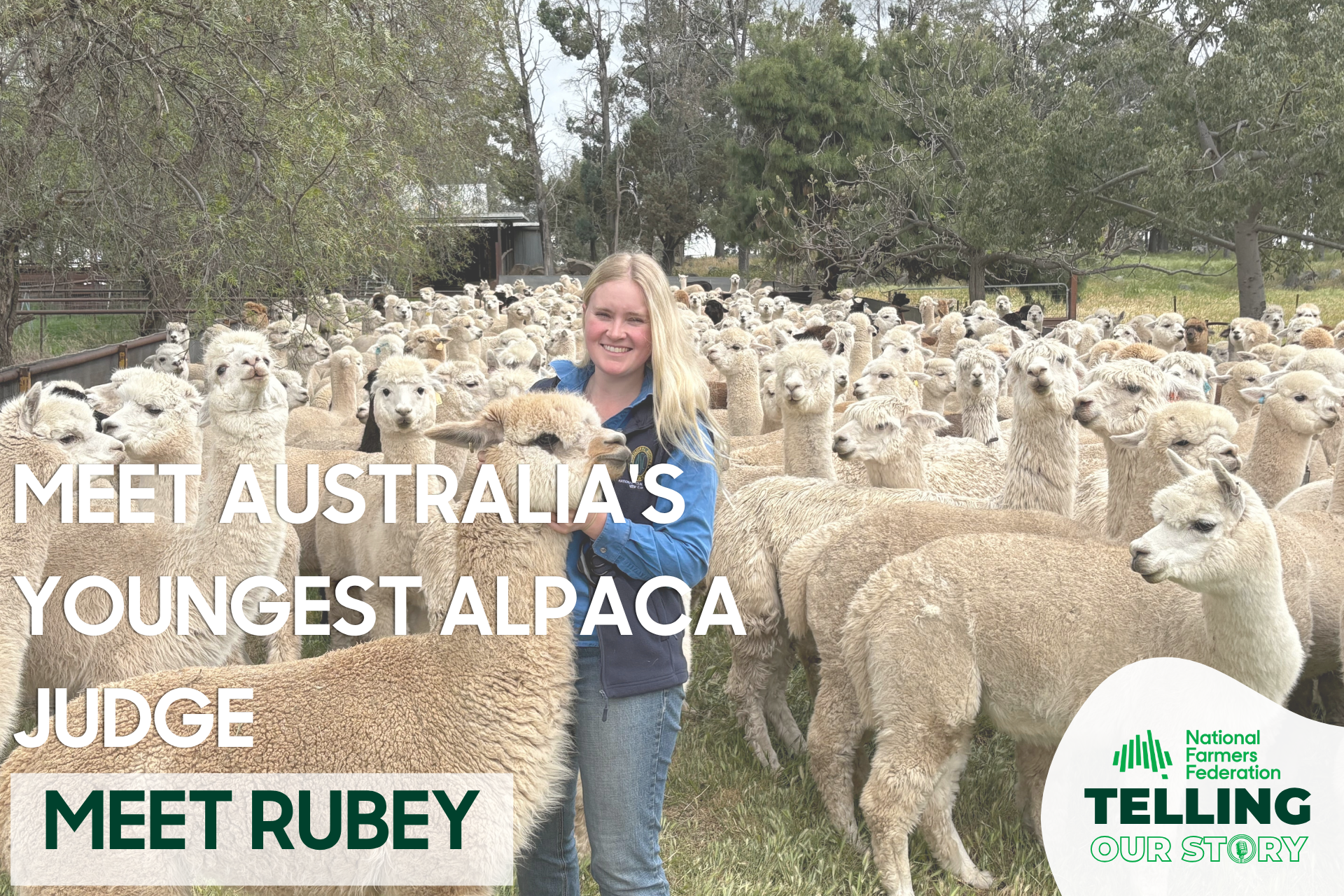
They’re quirky creatures with super soft fleece, members of the camel family and often unfairly criticised for spitting. Alpacas occupy a unique corner of the agriculture industry. And one central-west New South Wales farm boasts the state’s largest herd. These animals have won the heart of the next generation with young farmer Rubey Williams working on the family property and already turning heads as an industry leader. To learn more, Rubey Williams of Storybook Alpacas shares her story.
Her focus is shaped by past and possibility. On one property, a shearing shed in Mittagong, a unique spot for the history of alpacas in Australia. On another, a central west farm with an area that’s set up almost like a lab. For Rubey Williams, the contrast is clear. One holds memory. The other signals momentum.
Alpacas have always been part of her life. “I didn’t come along until 2000,” she says, noting her parents started in 1990. “So, I have literally grown up alongside the alpacas.” What began as familiarity turned into commitment early, marked by a milestone in her teens. “To finally, at the age of 13, have enough behind me to purchase my first show quality animal was really, really special.”
“I haven’t stopped showing alpacas since.”
The path wasn’t always set. After school came university, and a pre-med degree. Then a shift. “I’m probably one of the few people in the world that have COVID to thank for how my life has ended up now.” Time back on the farm reframed everything. “Lucky for me, home was a beautiful 500-acre property in the Southern Highlands with New South Wales’ largest alpaca herd on it.”
Perspective followed. “I hit the end of that six months and thought, I actually don’t know if medicine is something that I truly can dedicate myself to properly now.” The decision was practical but defining.
“I said to Dad, instead of paying for university, I'd like to buy into the farm.”
Alpacas may sit on the fringe of mainstream agriculture, but their value is precise. “They’re typically grown for their fleece,” Williams says. Fibre that is soft, fine, and functional. “Alpaca… is a dry fibre,” offering an alternative for those who can’t wear traditional wool.
That niche extends globally. “My main interest… is predominantly within that fleece and fibre market.” The work moves beyond the farm gate into international trade via air freight. “You could be heading across for a quick trip to Korea… and you could be sharing a plane with a crate of alpacas.”
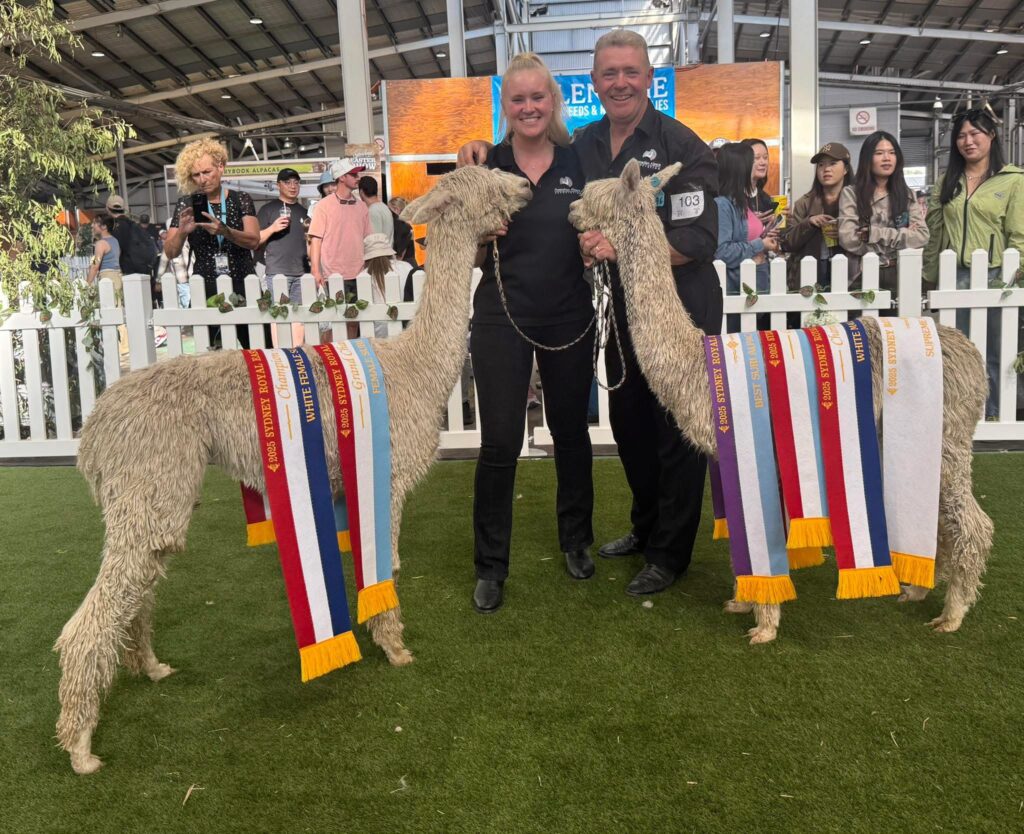
“It’s still a boutique, emerging industry in Australia.”
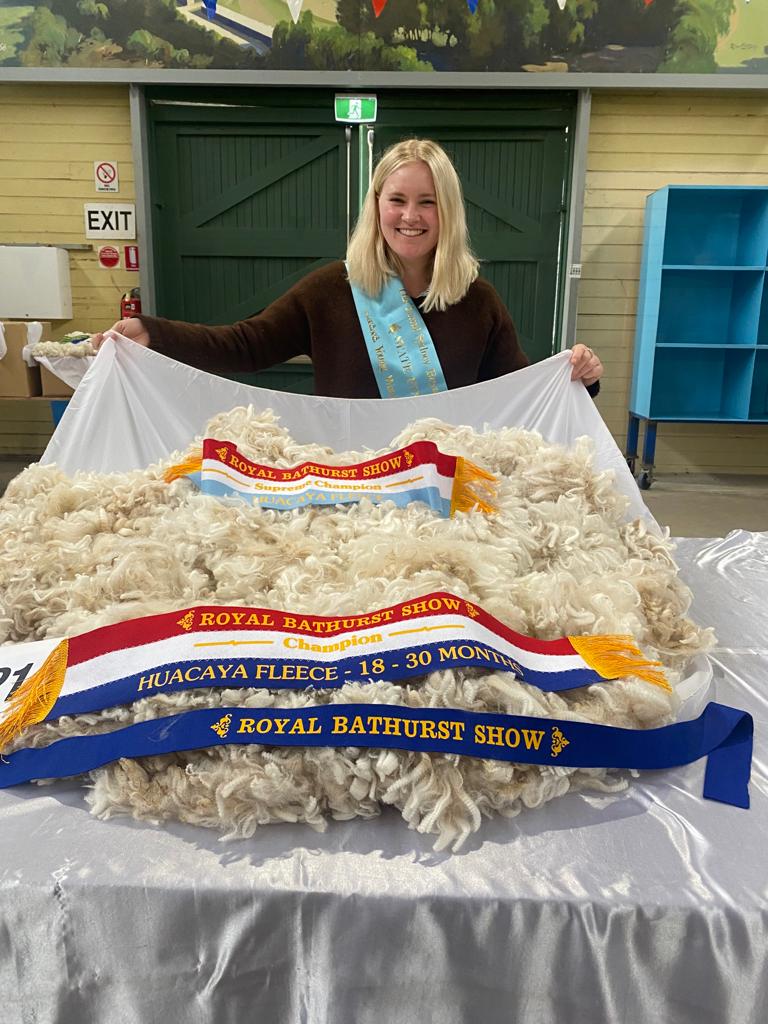
Her role reflects that reach. Now the youngest alpaca judge in Australia, she’s already stepping onto the global stage. “I’ve judged in New Zealand… I’m heading to Europe later on this year.” It’s an industry connected by shared purpose. “Having a common thread tying you together… has just been amazing.”
Closer to home, the lessons are different. “There’s a real sense of resilience that you gain from life on the land.” It’s seen not just on farms, but across rural communities—especially in moments of recovery from natural disasters like flood. She recalls “watching the area rebuild itself since that absolute tragedy has just been so inspiring.”
Even the animals themselves are often misunderstood. “It is a misconception… that it’s something that they do all the time,” she says of spitting. Instead, “it’s more of a defence mechanism.”
At 25 years-old, a long-held goal is already within reach. “Ever since I was little, all I wanted to do was travel the world judging alpacas.” Now, “that has started to really happen for me.”
The focus next is looking forward. “My biggest dream for the future is that our farm just continues to grow in leaps and bounds.” With the move to the central west comes space—space to expand, diversify, and build. “I just think that the move out here is just endless potential for what my family can achieve in the world of agriculture.”
It’s a modern farming story. Grounded in tradition. Shaped by change. And carried by a new generation choosing the land, and redefining what’s possible on it.
Hear more stories like this by subscribing to the Telling Our Story podcast on iTunes (or wherever you listen to podcasts) and follow podcast host Angie Asimus on Instagram for more updates.