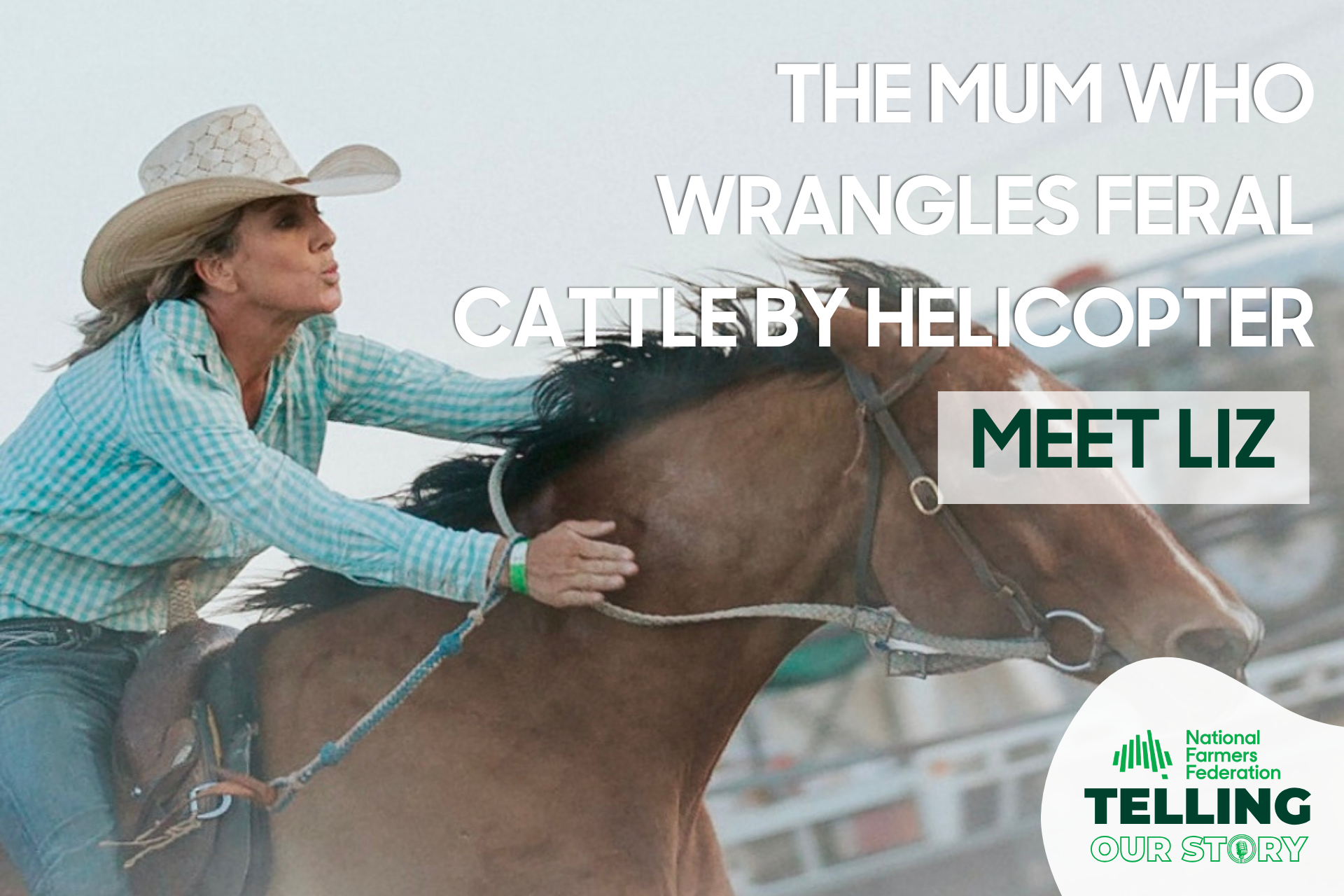
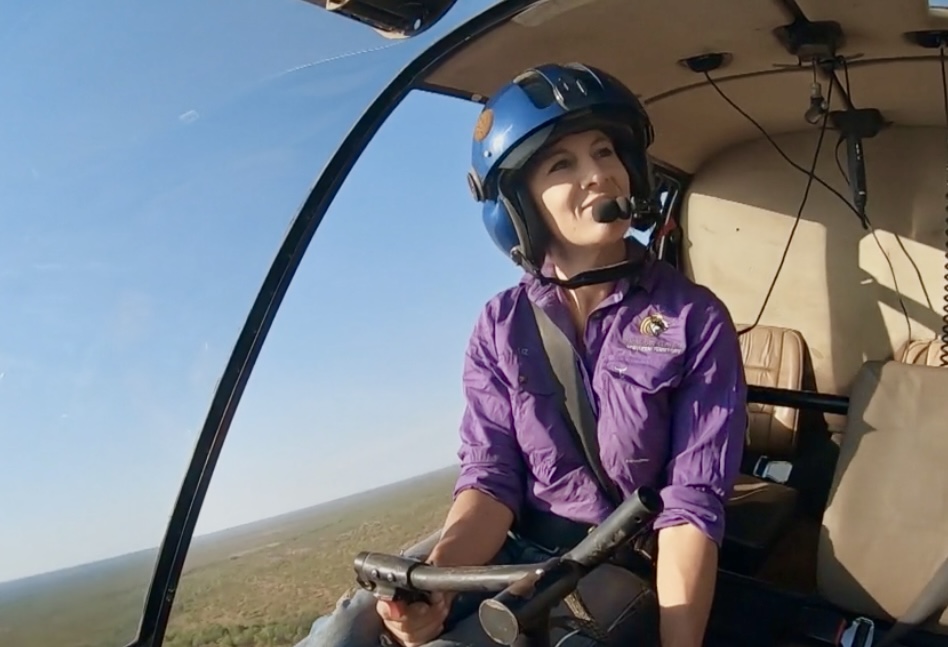
Mum, wife and bull catcher are roles you don’t often see on the same resume. Liz Cook does it all as an outback ringer in the Northern Territory. It essentially means, her job is to wrangle feral cattle for a living. Bull catching can be a lucrative business with hundreds of thousands of wild bulls and buffalo wandering remote properties across the country unclaimed. It is tough, it’s dangerous and it’s isolated. To learn more about this high-stakes world, Liz offers a rare glimpse into her life at Bauhinia Downs Station.
The station is incredibly remote, spanning 324 000 hectares. By Liz’s own description – it’s the wild, wild west. Think high escarpments, rockpools and amazing wildlife. They are 650 kms from Katherine, and 1000 kms to Darwin. That’s a long way to the nearest town centre. Liz says their groceries are collected from Heartbreak Hotel, which is a roadhouse about a 70-kilometre drive on gravel. It’s a far cry from her home, New Zealand.
“I ask myself how I ended up here. It’s usually when I’m sitting in the dirt with a truck tyre that’s flat or broken down in the middle of nowhere,” she laughs. Her husband, Willie, originally came over as a helicopter pilot and got into station management.
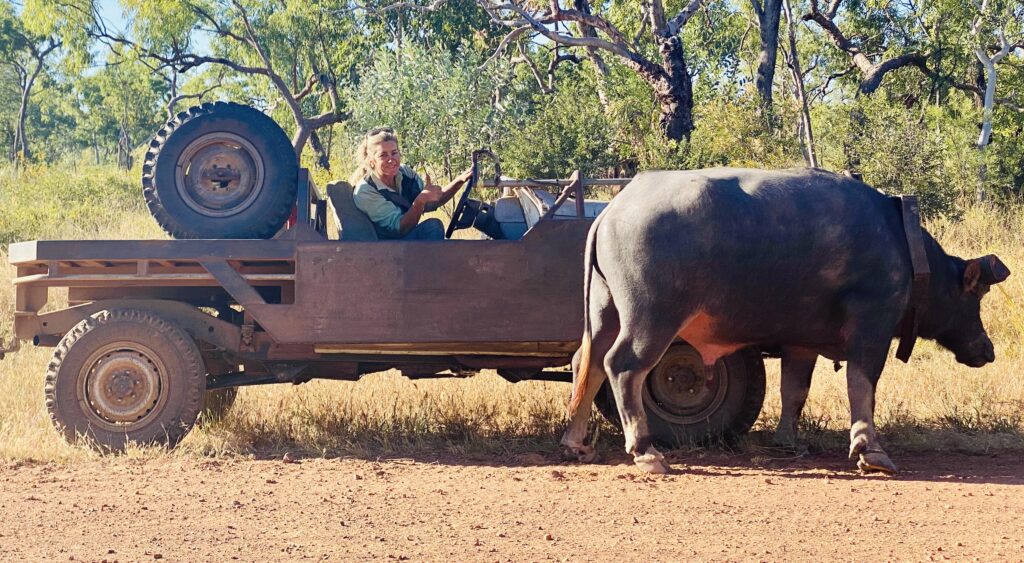
“They talk about the Northern Territory as Never Never Country. It’s because when you go away, you can never, never stop thinking about it.”
Liz and her husband Willie currently have a lease on the property to help the family catch feral cattle. They agree on a price and bring in the infrastructure to make it happen. That usually involves a helicopter, a mechanical bull-catcher, a generator, a bulldozer and some cattle yards. Willie does the flying and Liz is on the ground.
“We come to an agreement to go in and catch the feral and wild cattle and buffalo.”
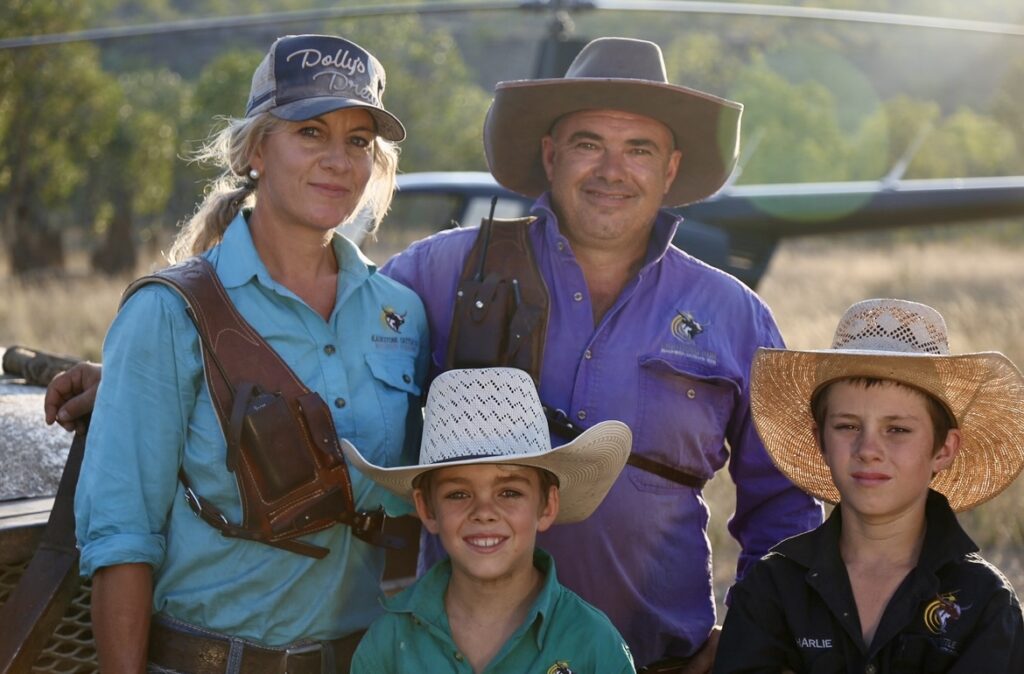
It’s a unique way of life for the husband-and-wife team – equally so for their kids. “The kids have done their fair time reading books while driving buffalo back to the yard,” she laughs. As their education has become more involved, the kids moved to online schooling with the help of a governess. Now, boarding school is the next step.
The demand for Liz and Willie’s services is high, with cattle and buffalo roaming vast, unfenced swathes of land. As prolific breeders, the animals can have a detrimental environmental impact. “National Parks quite often go in and cull them. No one wins out of that,” Liz explains. Their clients range from private land-holders to National Parks and Indigenous groups.
“If we’re able to take them into farming, it’s a win-win for everybody.”
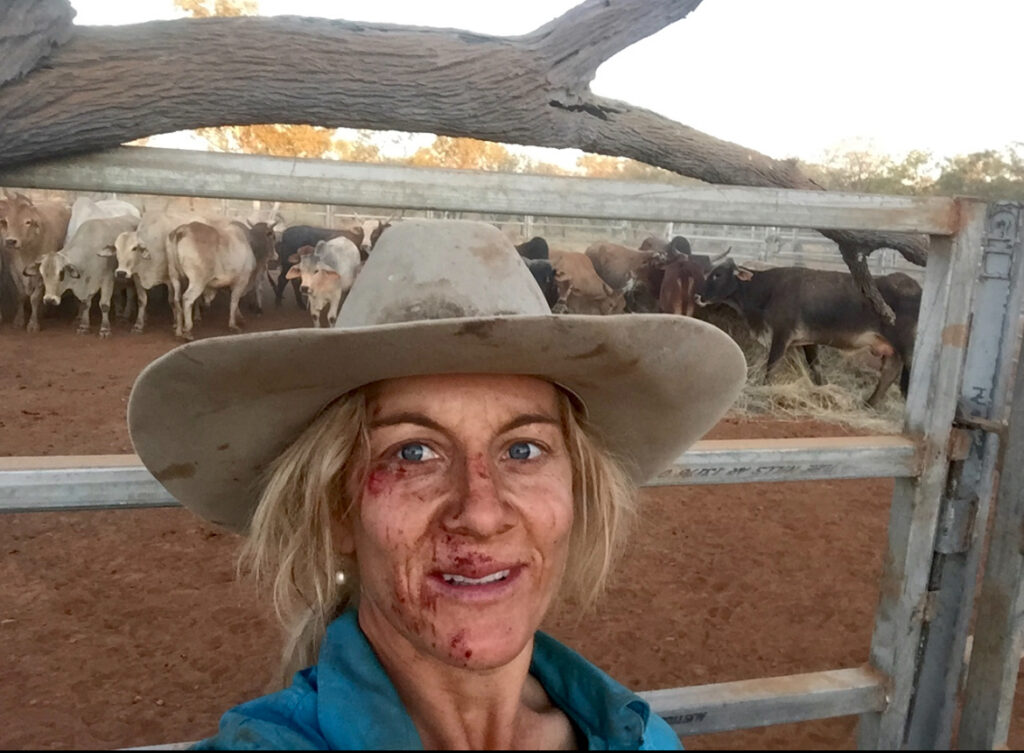
If all of this sounds dangerous, that’s because it is. “You learn pretty quick how you need to keep yourself and others safe. You have to have a high respect for these animals. The buffalo especially have very sharp horns.” Liz says you have to keep track of where your fingers and toes are at all times. The fact these animals have generally never seen a human before, Liz believes is an advantage. “You can gain their trust and manage them better.”
Liz plans to spend more time with her kids in the years to come, maybe even take them to school sport for the first time! For now though, she says the thrill of the chase still calls.
Hear more stories like this by subscribing to the Telling Our Story podcast on iTunes (or wherever you listen to podcasts) and follow podcast host Angie Asimus on Instagram for more updates.