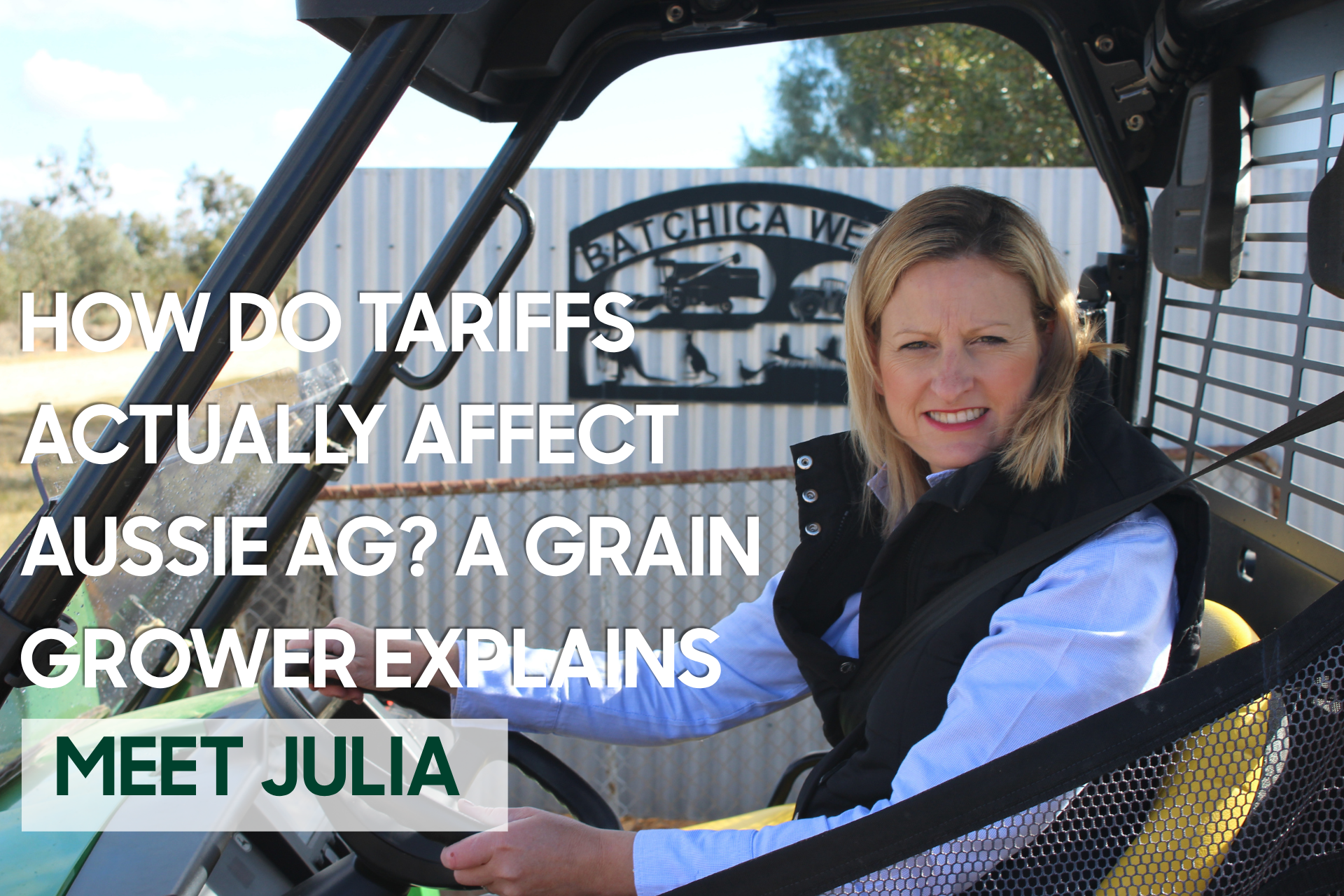
Tariffs are a bit of a buzz word right now. But what do they really mean for our farmers? The answer is – they can be good and bad. Who better to break it down for us than Julia Hausler. She runs a successful family farm and holds influential roles within industry body GrainGrowers. Julia is a tireless advocate for economic and social opportunities in her part of the world, Victoria’s Wimmera region.
“It kind of blows my mind on any given day that with the barley we've grown, someone in China could be enjoying a nice cold beer, someone in Vietnam might have a beautiful crusty bread from our wheat, and someone in India is getting their daily protein requirement from our lentils. All of that from our tiny little corner of Australia.”
Julia assists with the marketing side of their business along with delivery logistics, as well as bookkeeping, human resources and financial planning. But with an economics degree and earlier corporate career, she’s also well placed to offer insights into supply chains. A key topic facing the industry right now is the so-called ‘Trump Tariffs’. Such tension and global disruption inevitably impact the flow of goods and services around the world. “Tariffs are a form of protectionist policy; it distorts the flow of where goods and services would naturally go. It can distort it in volume, and in price,” Julia explains.
The outcome is Australia then must counter-react or try to offset some of the reaction. “You get a sense Trump wants to disrupt flow and make a statement to the world – America’s here and America can do what America wants to do, and you all better sharpen your pencils and negotiate,” says Julia.
At times like this, Julia stresses it’s vital that the grains industry is actively at the table negotiating free trade. Julia says Australia is in a good position to do this because of the unique qualities of our wheat. For example, noodles made from our wheat last days before discolouring whereas others lose their white hue the same day. Also, two-minute noodles made from Aussie wheat can hold a more appealing texture and shape without falling apart, than noodles made from other types of wheat.
“Our supply chains are not as efficient as they could be. So, road and rail is not where we actually make our products shine.”
Julia believes global uncertainly can also lead to some more introspection on how things could be done more efficiently, domestically. “For 25 years or longer, in the grains industry, there’s been this long distant dream to be able to have some sort or biodiesel production in Australia. That seems to be gaining some traction,” she explains.
Julia also has the carbon reduction requirement front of mind. “Right now, more than 60% or more of Australian canola goes to Europe and we are helping decarbonise Europe, when we could be doing that here.”

“It’s not the most sexy topic talking about freight and supply logistics. But it really is the backbone of Australia.”
The answer, she believes, is finding the right balance of investors, manufacturing and government willpower.
Hear more stories like this by subscribing to the Telling Our Story podcast on iTunes (or wherever you listen to podcasts) and follow podcast host Angie Asimus on Instagram for more updates.