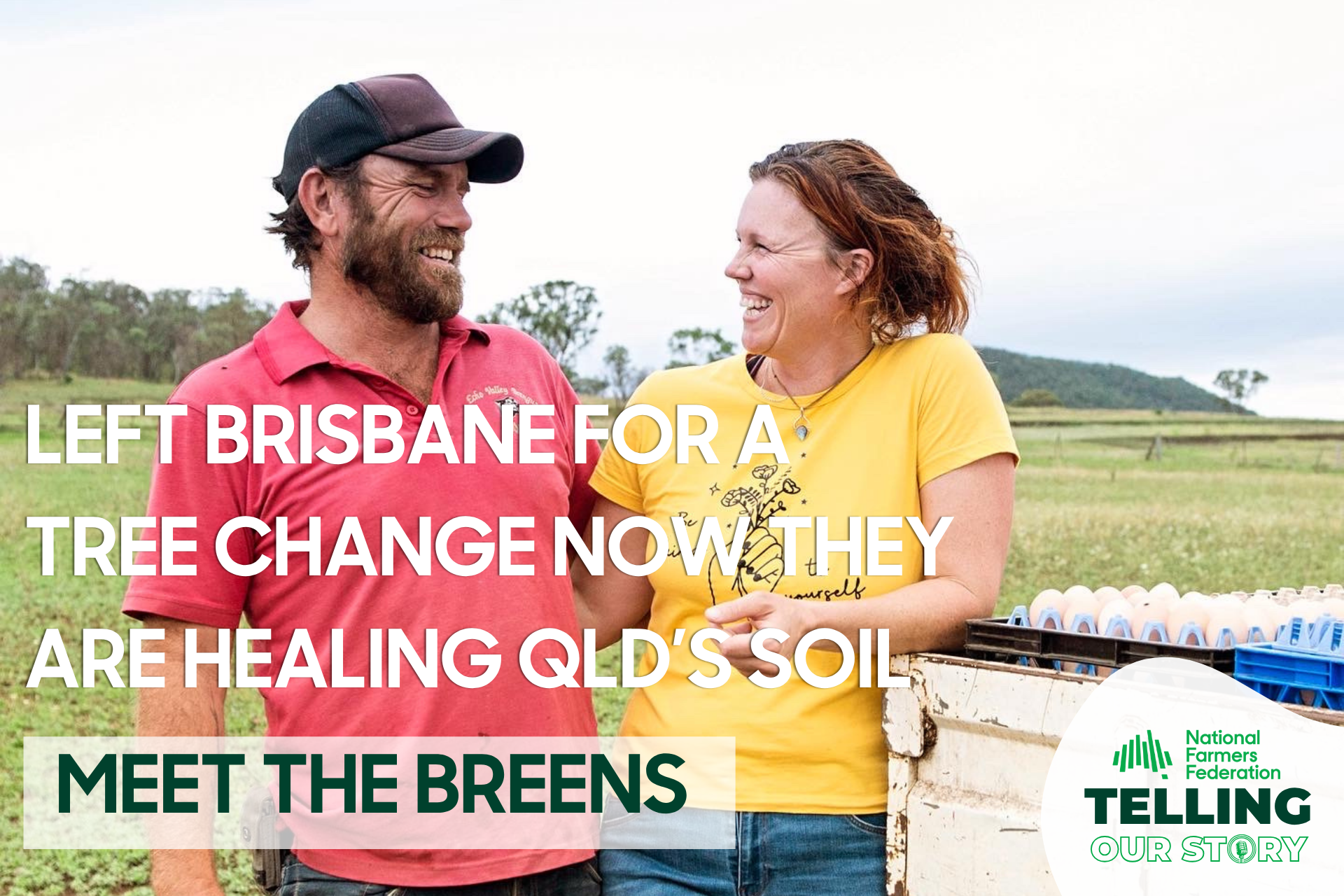
As first-generation farmers, this family says they started small and safe – but there’s nothing small about the big issues they’re addressing. Ethics, sustainability and regeneration underpin everything they do. To achieve that, they have a passion for First Nations’ knowledge combined with giving their animals the most natural life possible on a farm. To learn more about Echo Valley Farm, Randal Breen opens up about his two adjoining properties on 600 acres in south-east Queensland.
Randal’s mother’s side of the family is in agriculture, so he feels it’s in his blood. “I sort of felt as if that was something I wanted to do but there didn’t seem to be any way to get to it, so I lived in Brisbane city,” he explains. Randal got a trade as a carpenter, then a degree in social science, all a long way from being a farmer. But once he met his wife, Juanita, they decided to make the tree change. That was 15 years ago. Homing in on regenerative agriculture presented many parallels between his old life in social science and community. Building a farm based on values of togetherness and sustainability felt like the perfect crossover.
“We jumped in boots and all and have been swimming ever since!”
The appeal of regenerative agriculture, for a first-time farmer, was all about being able to start small and scale up – stacking enterprises. One of their first steps was in pastured poultry. “So, we’re moving hens around the landscape to produce eggs., healing our country with chicken manure. We literally started with a tiny box trailer.” The trailer was pinched from a friend’s backyard and about 250 chickens got things started. That’s now grown to 3500 chickens moving across the landscape every week in five big trailers.
“We were able to start it for next to nothing.”
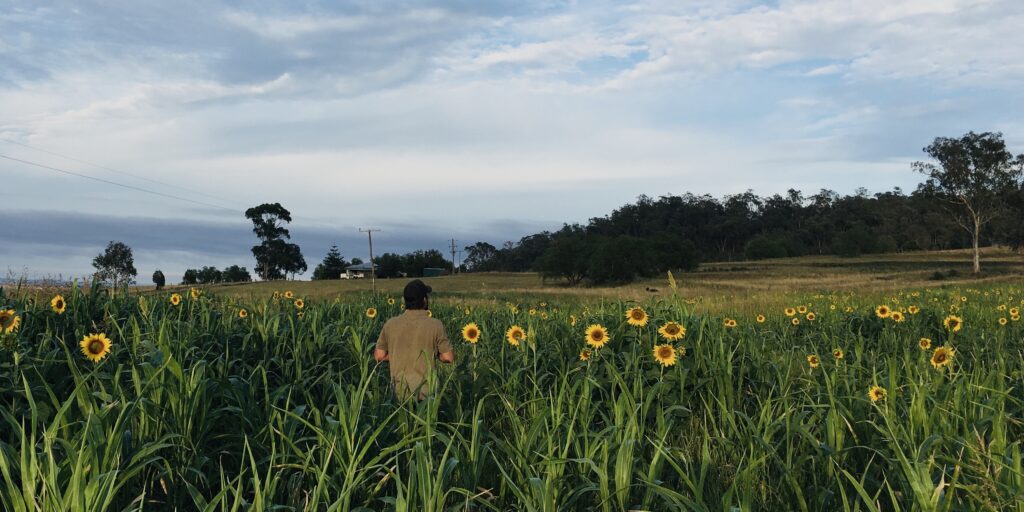
The Breen family also raises cattle that they move across the landscape, in a holistic, planned grazing model. “We never stay in one spot longer than a week, but we can be moving them as often as daily. So, they graze the grass and then behind them, we bring in our trailer with the chickens. Those chooks can then scratch out the cow manure, leave their manure behind and fertilise that grass.”
Prior to their arrival, the farm had been monocultured with cropping for more than 100 years. Randal and Juanita spend their time trying to build up what was degraded soil.
“It’s a really lovely system of symbiosis between animals and plant life.”
Randal draws on First Nations’ knowledge in the running of the farm, both from reading and from first-hand knowledge. “Really identified the fact that for 60 000 years First Nations people have been on this landscape managing it and farming it in a way that perhaps wasn’t familiar to Europeans when they first arrived, but they were managing this landscape incredibly effectively,” Randal shares. Fire is one element in their management that is successfully dealing with invasive flora. “Making way for more grasses and more healthy timber species to come back in. It’s quite remarkable to observe it.”
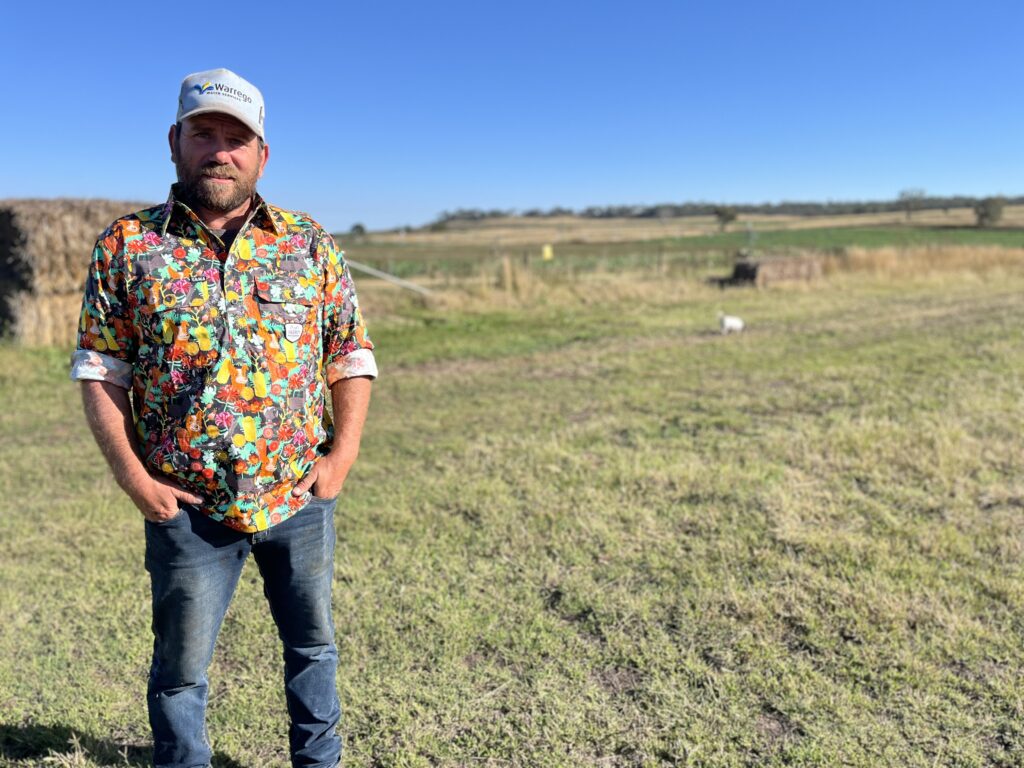
“We are very, very grateful and humbled by the fact that First Nations people are willing to share that with us and to give us the skills to help heal our landscape.”
Randal says since becoming a farmer, he’s had to learn to be an expert at a heck of a lot of things. “So perhaps the dopey farmer on his tractor is a bit of a misconception because you have to be the weatherman, the agronomist, the vet, the plant scientist.”
The Breens sell directly to consumers through a community-supported-agriculture model and have built a loyal following. During Covid, when there was less produce, their customers kept paying their monthly fee. “When we choose to build a relations-based food system, those who can, step up and support. And then when we have abundant times, we’re then able to give extra back.”
Now that is a truly local food system.
Hear more stories like this by subscribing to the Telling Our Story podcast on iTunes (or wherever you listen to podcasts) and follow podcast host Angie Asimus on Instagram for more updates.