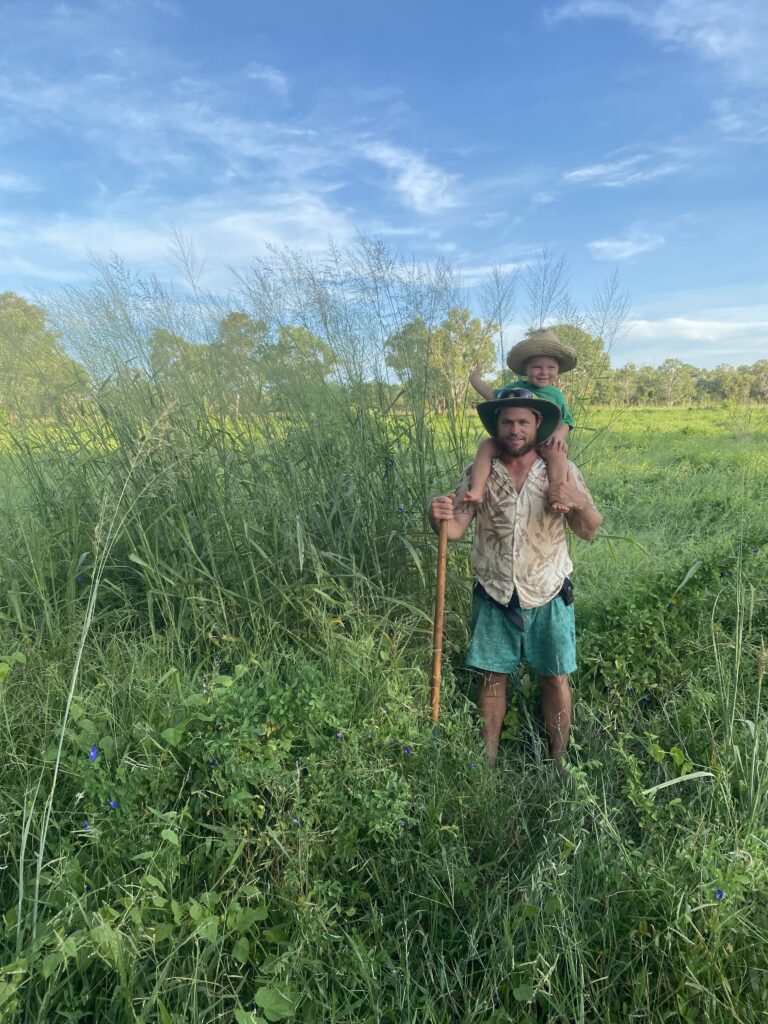
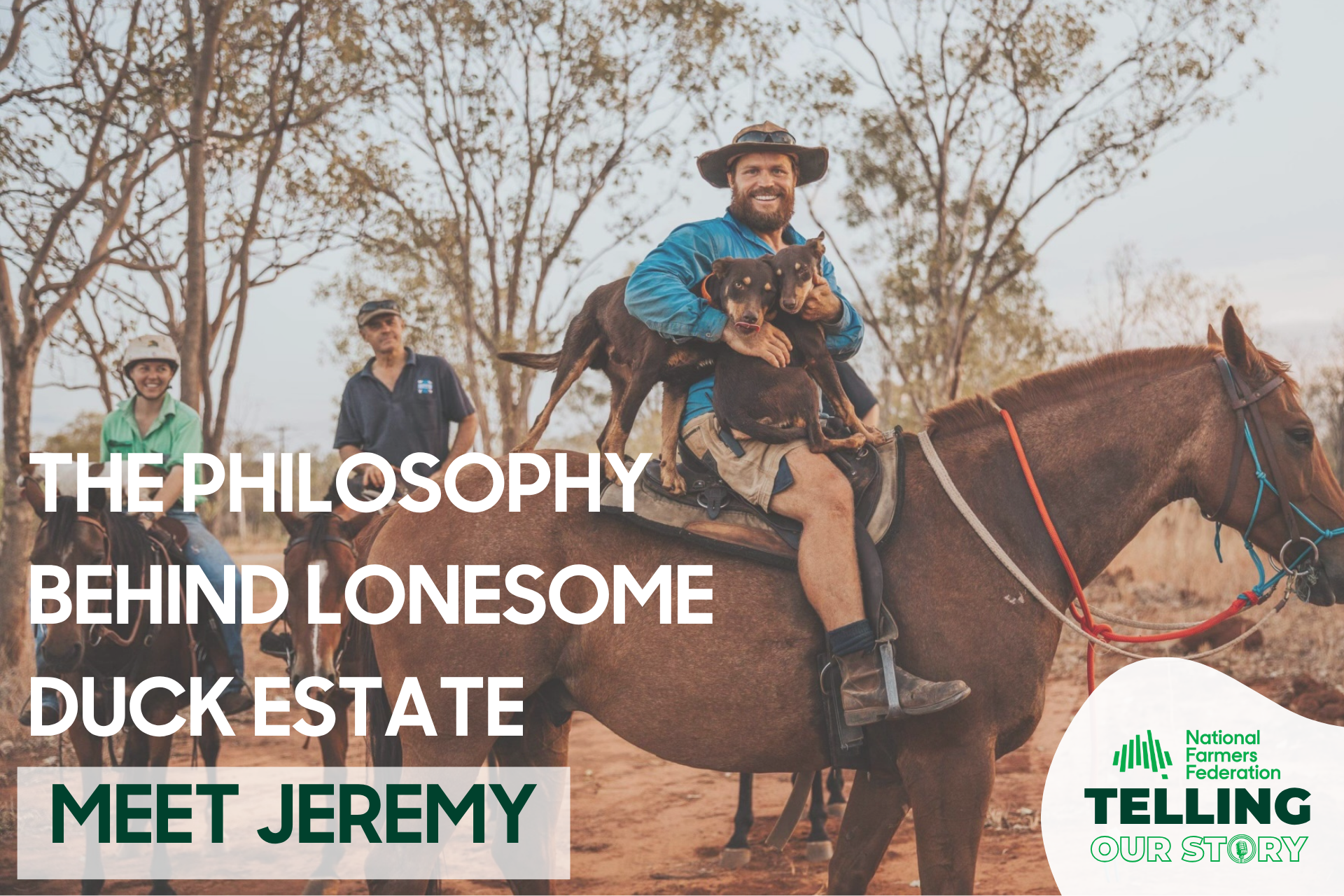
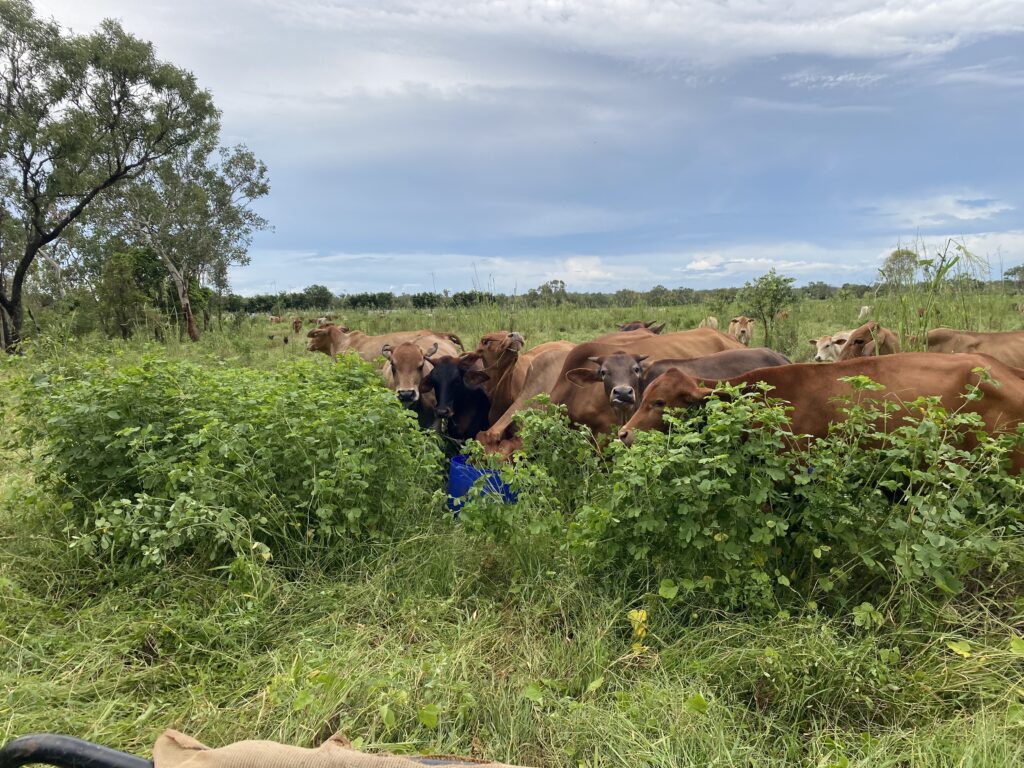
Big things happen with a commitment to a series of small changes. That philosophy is working wonders on a Northern Territory farm in Katherine. From starting out with just half a dozen cattle to currently farming more than 350. Throw in vegetables, fresh cut flowers and eggs – it’s easy to see why the farm continues to flourish. The property is managed from a holistic, entire landscape perspective. It’s work that has caught the eye of industry leaders with Jeremy Trembath of Lonesome Duck Estate being named among the finalists for Young Grower of the Year.
“Each day, each time, each moment we are seeing things in a different way, and we are always changing.”
At the core of what Jeremy practices, is land management. That means never over-grazing, managing inputs like fertiliser and pesticides in a very minimal way only when absolutely necessary and the same for tillage. “We just look at things a little bit differently. We still want an outcome. It’s just we might need to take a different route to get there,” Jeremy explains.
“It’s like when a child learns to walk and they fall over, we don’t say, ‘geez you’re not good at that’ – we encourage them to give it a go.”
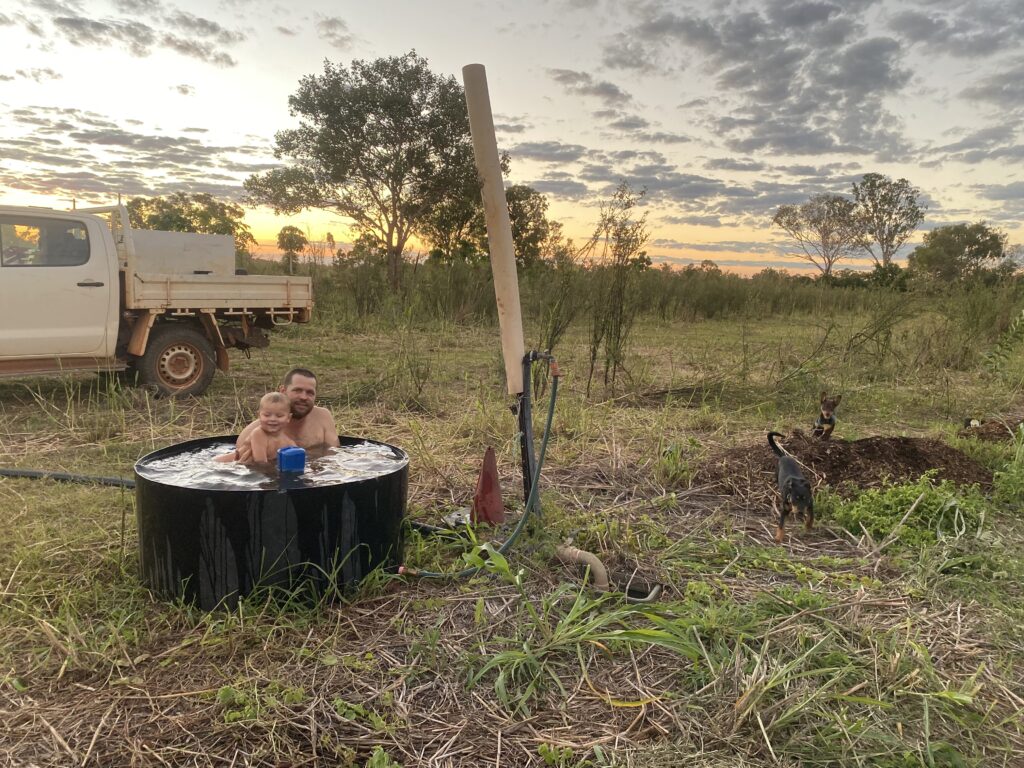
Jeremy believes taking another look a problem, and working out another way is the most exciting thing about agriculture. It’s learning to understand a new system. “And the fun is in that, right there.” Most problems on the farm come back to soil, according to Jeremy. “Soil is crucial to the human race’s success,” he says.
“We need to take the approach of not how much can we take but, how much can we afford to give back. And that’s a balance. Soil is a bank account. We can invest in it.”
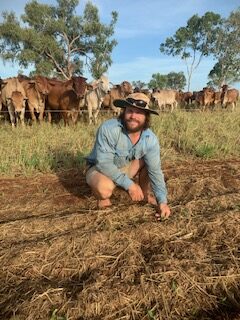
Local markets are Lonesome Duck’s only source of income. It makes sense in the Northern Territory not to send produce interstate for sale. “Food shouldn’t be something we worry about. I just want to be able to eat something without washing it – the only thing that should be on there is some healthy soil. We want to be part of pushing that.”
On the farm, that looks like chickens in a mobile house that moves from paddock to paddock, big cropping areas growing, and then the cattle follow. The pattern is high density, short duration and long rest periods for the land.
The fact Jeremy can choose to explore all this, he knows, is a great privilege. “There’s just something about being on the land and having the freedom. Freedom to express yourself as a person.”
“It’s a great life for the family and for myself, and everyone around us. I just wouldn’t change it for anything.”
Jeremy’s motto for the future is Save our Soil to Save our Soul – a melding of agricultural food production and landscape regeneration. And he thanks every person who has bought food from his farm. “You’re in it with me, and we’re all connected.”
Hear more stories like this by subscribing to the Telling Our Story podcast on iTunes (or wherever you listen to podcasts) and follow podcast host Angie Asimus on Instagram for more updates.